“Wait, when do I have to turn my lapel microphone on and off?”
After a decade of Jesuit formation, three years of theology studies, a full semester learning how to preside at the sacraments, and dozens of practice runs through the Mass, I found myself the day after my priestly ordination confused with one of the most basic questions: when to turn the microphone on and off while presiding at Mass.
Turns out, just as in many other career paths, a lot of the practical job training you get being a priest comes during the practice of actually being a priest.
****
The fourth and final stage of Jesuit formation before priestly ordination is Theology Studies. We might not get into the details of handling lapel mics, but there is a lot to learn during these three years, from graduate studies in theology and ministerial experiences.
Jesuit formation is lengthy (usually 10-12 years…you could say that we are aged like a fine wine. Or is it more like a stinky cheese?). In the initial stages of my formation–Novitiate, First Studies, and Regency–ordination felt a long way off. Then I began Theology Studies in the summer of 2018, and ordination suddenly felt right in front of me. And it felt like the path to ordination immediately started to speed up.
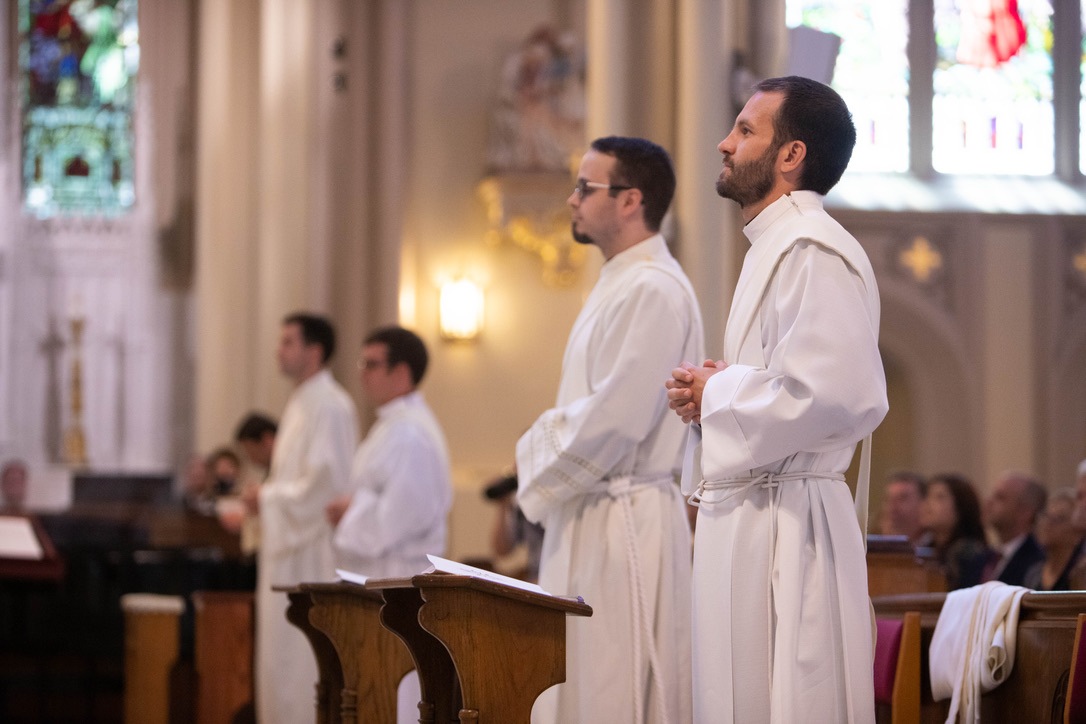
Within a month of arrival, I was serving in the diaconate ordination for guys just a couple of years ahead of me who were on their way to priesthood. These were Jesuits who I knew well over the years, and now they were becoming priests. In the summer after my first year, I attended the Arrupe Experience: a month dedicated to reflecting on the meaning of the priesthood in the context of our Jesuit identity. Just a couple months later, I had to write and submit a petition to be ordained, and send in names of family, friends, and collaborators who could reflect on my fitness for priestly ministry (not physically-speaking, but I think I had that covered too). Once that was approved, it was time to prepare for my ordination to the diaconate (a transitional step 6-12 months before priestly ordination). Then the big day came on June 12, 2021, when I was ordained a priest at Holy Name of Jesus Church in New Orleans, LA. It was the culmination of ten years of formation and a tremendous blessing and joyous celebration with family and friends.
Whew! See how quick that can come together? But let’s slow it down and examine the components of this stage in formation that finished my preparation for ordination.
Studies
As the name suggests, Theology Studies is primarily aimed at providing the academic training required by the Church to be ordained a priest. The Catholic Church requires four years of theology coursework, and Jesuits complete one year earlier in formation, and then finish the final three years after their ministry in Regency.
While some U.S. Jesuits are sent around the world, most have studied at the Jesuit School of Theology in Berkeley, CA, Regis College in Toronto, or the Clough School of Theology and Ministry at Boston College, which is where I spent my three years. It is worth noting that Jesuits, unlike most diocesan seminarians, do not study in a dedicated seminary forming men for priesthood. We study in Jesuit schools alongside other lay and religious students- men and women from a variety of backgrounds committed to graduate studies in theology. I took classes with nuns, young mothers, and non-Catholics, among others, all of whom brought unique perspectives to the material we studied together.
In the U.S., most Jesuits study for a Masters in Divinity (M.Div.), although there are other options. The M.Div. is a multi-disciplinary degree that includes classes in Scripture, pastoral studies, systematic theology, the history of Christianity, and ethics. The degree gives you a good overview of a lot of areas, but I was surprised to realize that even in an 82-credit program, you can’t do it all! For example, I never took a class on the Old Testament prophets or the history of the early Church. And, believe me, I took a lot of classes.
People can approach their theology coursework in different ways. I followed the advice I had received earlier in studies: choose your own specialization. During graduate studies, you are given a lot of freedom to pick your final paper topic. To choose your own specialization, the advice I had received was to narrow in on a subject area of interest (e.g. Catholic secondary education, liturgy, prison ministry) and find ways that the class topic applies to your area of interest for the final paper.
I spent my Regency working at a development nonprofit in Nicaragua, where I learned Spanish and became immersed in a Latin American context. For the summer after I finished in Nicaragua and before I began Theology Studies, I worked with the Kino Border Initiative on the U.S.-Mexico border. All of which helped shape the specialization I chose for my theology coursework.
I chose immigration. So I approached every class that I could from the lens of immigration, and developed my final paper topics accordingly. For my class on Eucharistic theology, I wrote about the border Mass between El Paso, Texas and Ciudad Juarez, Mexico. I explored the contrasts of celebrating the Eucharist (a sign of unity) next to the wall marking the U.S.-Mexico border (a sign of division). For my class on grief and loss, I wrote about pastoral considerations in response to the policy of family separation for migrants at the border. For my class on ethics, I wrote about the virtue of hospitality in Scripture and Church history, and the implications on us today.
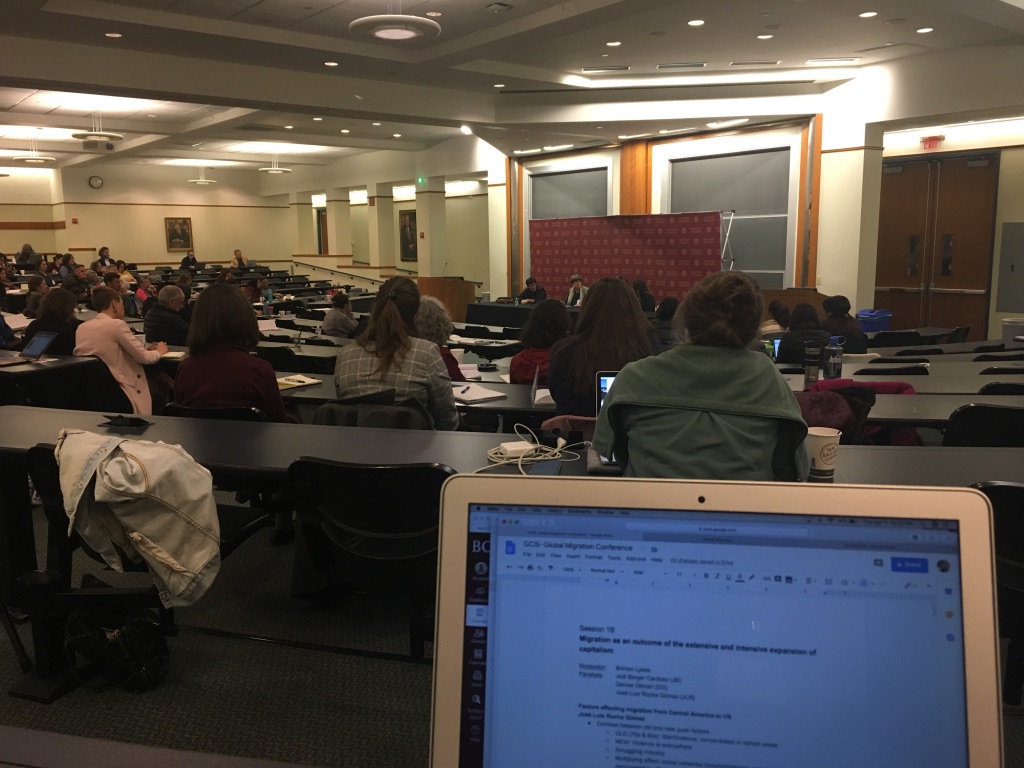
In other words, I was able to engage a diversity of theological areas through the lens of immigration, which has served me well in my priestly ministry. After my ordination, my first mission as a Jesuit priest was to Brownsville, Texas on the U.S.-Mexico border.
While we might not be able to cover every topic related to theology, the studies are extensive and prepare us well for ministry in the Church. Five years later, I still find myself looking back on class notes to help me prepare a homily or respond to a question from a parishioner.
Ministry
The classroom component is primary during theology studies, but we also engage in ministry to remain grounded in the pastoral work that our studies are preparing us for.
Within a month of my arrival at Boston College, I was thrilled to hear that the men’s basketball team was looking for a chaplain. As a lifelong sports fan, I volunteered immediately. I attended practice to get to know the coaches, staff, and players. I went to every home game and offered a prayer in the locker room before heading out to the court. I even got to travel for a few road games, like Notre Dame and Duke.
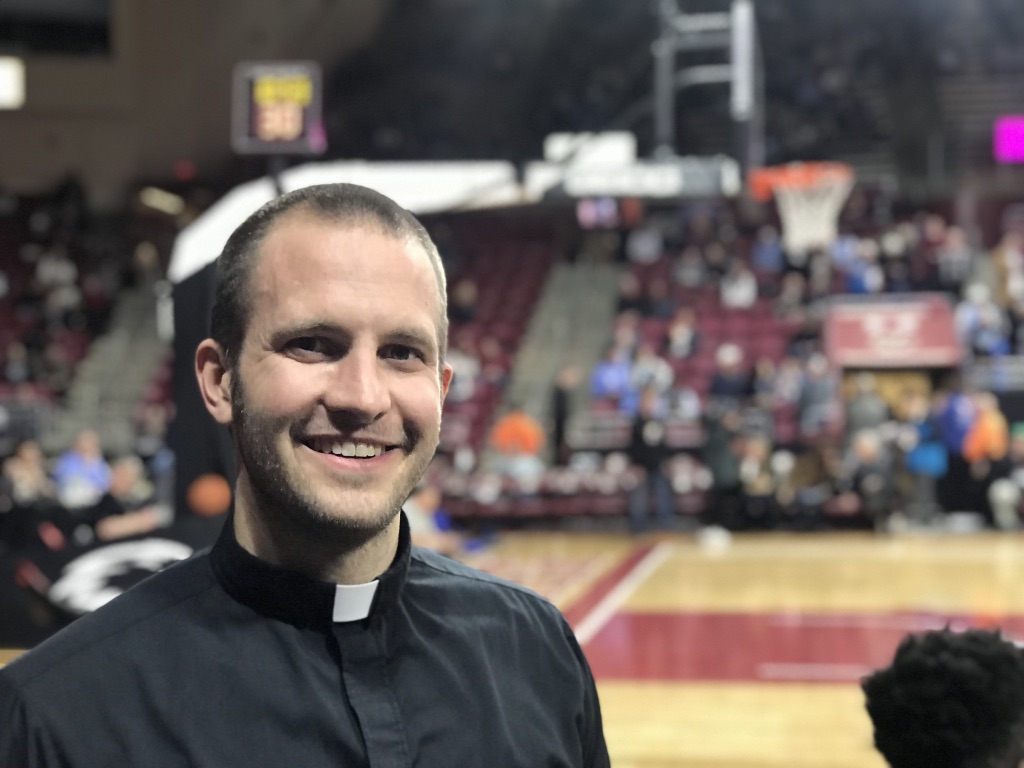
Unfortunately, my chaplaincy did not result in team success. It is not my fault! We are not all Sr. Jean. At the end of the day, my role as chaplain was not to pray our way to victory, but to be a sign of the Catholic identity of the school and a reminder that God is with us, in the wins and the losses.
Along with chaplaincy, I dedicated time during theology studies to prison ministry. On Sunday mornings, I would join other volunteers at the Suffolk County House of Correction. We would split up and visit all the prison wards to offer a communion service and reflections on the Scripture readings. In large wards, we would invite people to gather around and join in our service. In solitary confinement, we would walk cell to cell and kneel next to the slot in the door to communicate with inmates. It was a powerful experience.
I remember leading a communion service one day when the Gospel passage was on the cost of discipleship. Jesus tells his disciples: “Anyone who comes to me must hate their father and mother.” I tried to nuance the words of Jesus and emphasize how our loyalty to God must come first. I asked if anyone else wanted to share. A young man with bulging biceps raised his hand. “My daddy beat me and abandoned the family. I hate the things he did to me and to us. Maybe that’s what Jesus was talking about. For me to be a disciple, I have to be a different kind of father to my kids.” He preached the Gospel better than I ever could have done, and he opened up the Scripture to me in an entirely new light.
In our last year of theology studies, those who are on the track to priesthood get ordained a transitional deacon. We are invited to find a local Catholic parish where we can serve as a deacon by assisting at the altar, preaching at Masses, and presiding at baptisms, weddings, and funerals when possible.
I served as deacon at St. Mary of the Angels in Roxbury, MA. The Church has a passionate justice-oriented English-speaking community, and a growing and vibrant Latino community. It was a great opportunity for me to immerse myself in a “shared parish,” where different language groups operate in a shared space. I saw both the gifts and challenges.
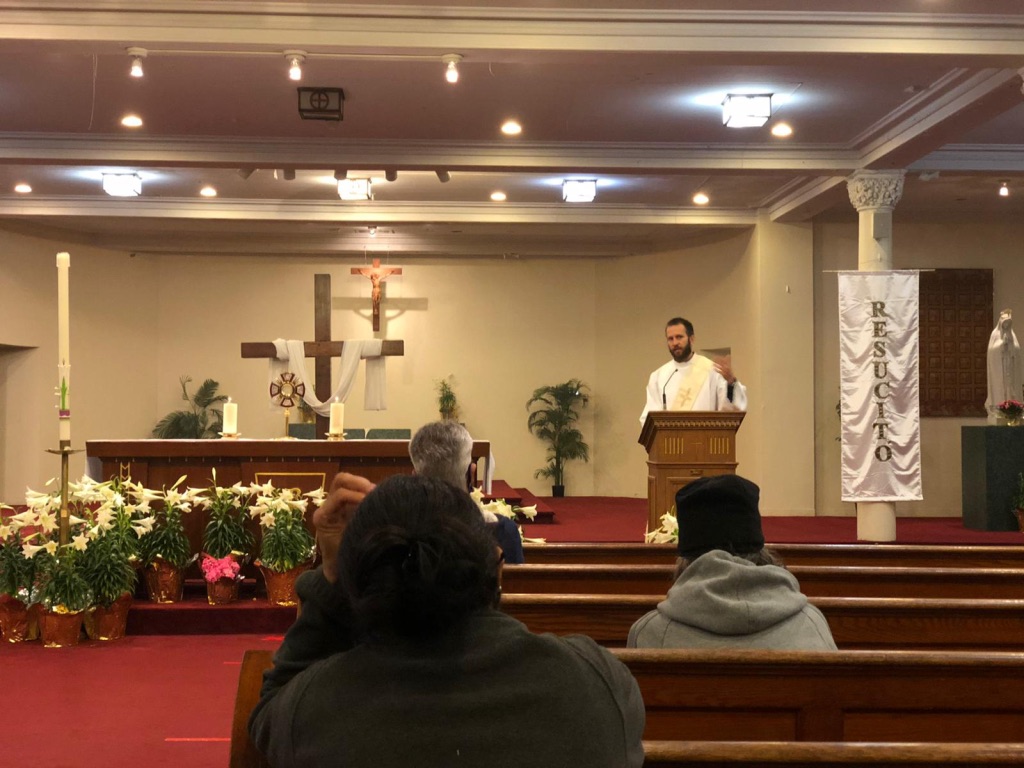
For example, some members of the English-speaking community did not want a joint bilingual Christmas Mass, because they wanted to sing all the traditional Christmas songs they know and love. We had two separate Masses. But the entirety of the Easter Triduum was bilingual, including the foot washing on Holy Thursday and the Stations of the Cross on Good Friday. People from both communities gathered together, and it revealed the great possibilities that can come from a shared parish.
The opportunities for ministry during theology studies help to expand our horizons, introduce us to new contexts for ministry, and stretch us in new ways. Sports chaplaincy taught me how to celebrate in victory and comfort in defeat. Prison ministry prepared me for my regular visits to immigration detention centers. And my experience as a deacon prepared me well for ministry at a local parish in Brownsville with its own mix of English and Spanish communities.
Community
As we dive into our theology classes and throw ourselves out there in ministry, we remain grounded in the community life we share. During Theology Studies, I lived at Faber Jesuit Community near Boston College. We were a large international community with over 70 Jesuits living in eight different houses.
One great advantage to community life in Theology Studies is the way that it serves as a reunion with U.S. Jesuits you have known over your decade in Jesuit formation. I was able to reunite in community with guys from my novitiate class and others that I had lived with in First Studies. Just imagine if you ended up living in the same neighborhood as half a dozen or more of your college friends a decade later. It is such a fun reunion.
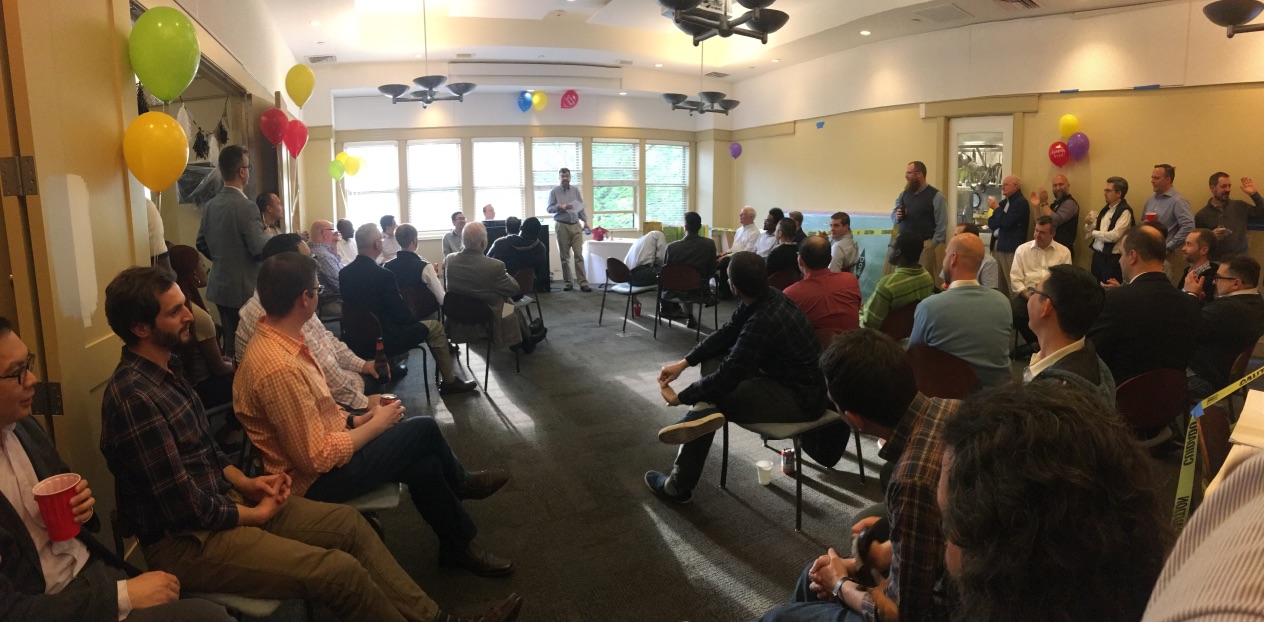
Another advantage to community life is the diversity of Jesuits from all over the world that come together in one community. In my house alone, I lived with Jesuits from Poland, Burkina Faso, the Philippines, Zimbabwe, and Uruguay (just to name a few!). We had a cooking rotation in the house, so we enjoyed a variety of dishes from around the globe on a weekly basis (not that we were all great cooks, but some certainly were!). When an international news story broke, there was usually a Jesuit in the community who could give you an on-the-ground update from their family and friends.
Some of my best memories from Theology Studies include moments in community. Gathering around the fire pit on a weekend evening for laughter and fellowship. Watching the TV show “The Americans” every Wednesday night with my house. Going for a run with a friend around the reservoir. Planning hikes in the White Mountains of New Hampshire.
All of these moments helped to shape deep friendships that continue to this day. Every year for New Years Eve, a small group of us who lived together in Theology Studies plan a reunion. We come from four different provinces, so it is a rare occasion when we are able to be together. And every birthday, I get messages from across the globe from Jesuits who I lived with who are now back home and continuing to live their Jesuit vocation. Community enriches our Jesuit life in so many ways, including the large international communities we live in during Theology Studies.
****
When I look back at my three years of Theology Studies, I am so grateful for the knowledge learned, the ministry experiences gained, and the community we shared. I continue to live out the graces of that stage of formation in my priestly ministry and Jesuit life today.
Oh, and I figured out when to turn the microphone on and off.
****
Photos courtesy of author