
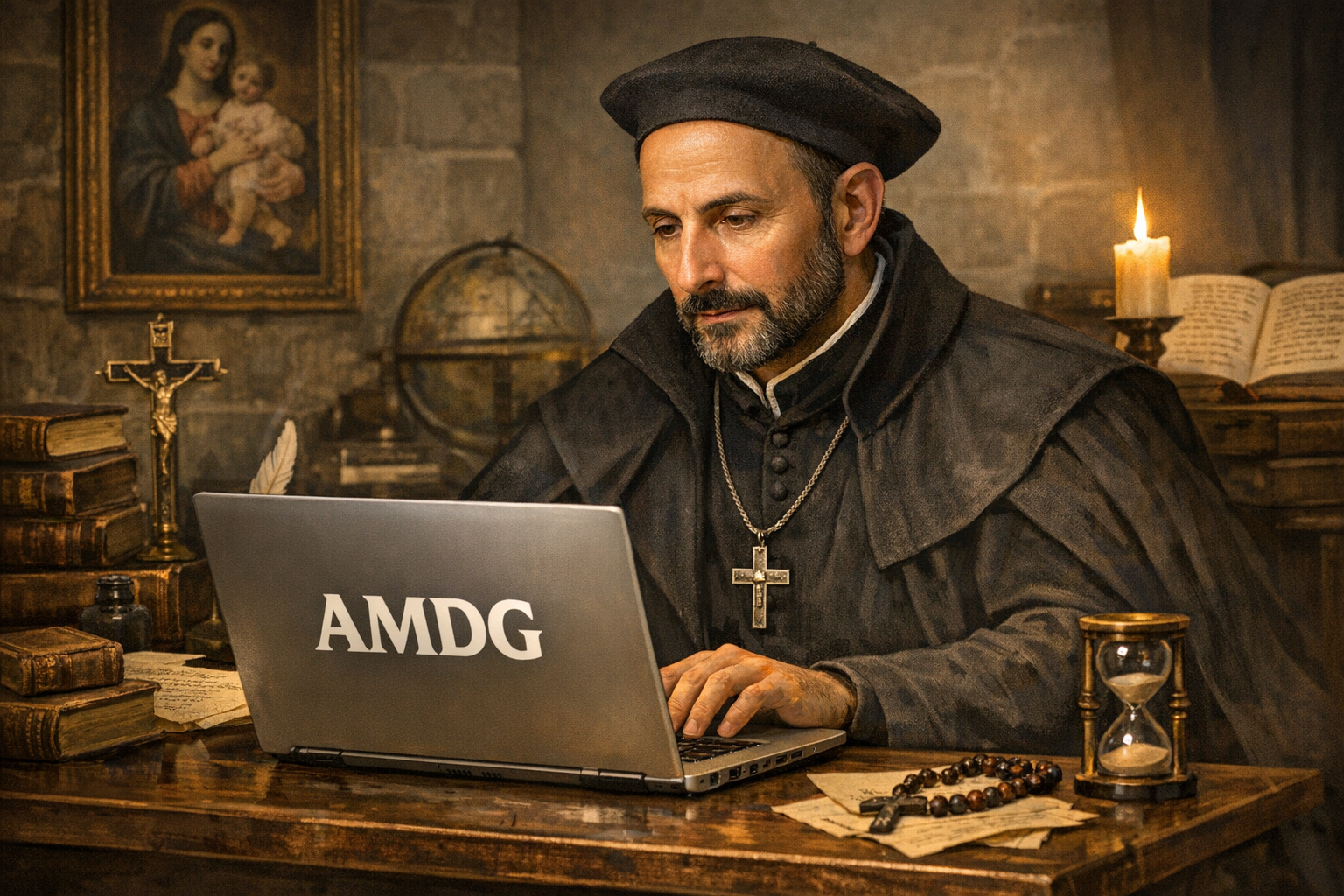
In the spring of 2025, I co-taught Economics at a Jesuit high school. My first assignment was for my students to write me an email introducing themselves, sharing what they knew about economics, and listing what they wanted to learn in class. As I graded those emails, I found one email that seemed more like it came from a graduate student than a junior in high school.
I remember typing in the comments, “This was one of the best emails I’ve received…” Just before I posted it, I thought, “Shoot. This was too good.” I then found three AI detection tools, all of which confirmed that 100% of this pristine email was generated by artificial intelligence. I was shocked—someone really turned to ChatGPT to write an email about themselves?
After speaking with my co-teacher, we agreed to test the rest of the student emails. Luckily, only one other email was flagged for AI. Again, same three tools, same three 100% responses. Literally, these students copied and pasted the ChatGPT responses and sent it to me. Still, I didn’t get mad until they repeatedly denied any wrongdoing. As I showed them the evidence, I resonated with Michael Corleone’s line in The Godfather—“Don’t tell me you’re innocent! It insults my intelligence.”
I first learned about AI back in 2023, when I attended a panel on the subject with the Lyceum Movement in Des Moines. While I had never used it, hearing the panelists and other guests share their experiences with AI in business, education, and engineering piqued my interest. Three years later, I’m still trying to make sense of AI as it ingrains itself ever more deeply into daily life.
Despite my initial frustrating experience with my students’ emails, I believe AI can help us pursue the greater glory of God—if we use and promote it the right way.
At the outset of the Spiritual Exercises, St. Ignatius explains that God created all things to help us pursue the end for which we are created—to praise, reverence, and serve God, thus saving our souls (Sp. Ex. #23). Ignatius further calls us to be free to use these tools if they help us to achieve this end, and to be free to set these good things aside if they hurt us more than help us. As a created thing, and without a commandment saying “Thou shalt not use Artificial Intelligence,” discernment borne out of real-life experience can help us figure out what we are called to do.
When teaching high school students, I found that AI tools greatly increased my output of classroom materials. I could quickly format handouts and generate PowerPoint slides designed to fill a whole class period. I even used ChatGPT to generate an image of myself as an action figure, mimicking an Instagram trend. This attention-getter began a discussion on ethically using AI, one of my favorite lessons of that semester and an important lesson for my students as they learned what it meant to be Men for Others.
In my current mission of studying philosophy, my classes have taught me to recognize how AI can properly enhance my learning without replacing it. My professors specify what options are permissible for AI engagement. Some professors will only assign tests in Blue Books, prohibiting any technology in the classroom, while others allow students to brainstorm or even sharpen arguments within their assignments with AI, provided such assistance is properly disclosed.
With proper AI prompts, I have improved my understanding of complex philosophical arguments through simplified examples, and saved time identifying the most substantive areas for improvement through comparing my writing with a professor’s rubric. Beyond saving time, AI helps me fulfill my current mission of studies, and better prepares me for the context of my future missions. In this concrete way, AI helps me to better serve God.
Surprisingly, AI has also strengthened my living of the vow of obedience. By accepting my professors’ AI policies and following their class rules, I have come to appreciate one more way to better live out my mission. This comes both in adapting my study methods and by trusting that Christ can work through my professors to help form me for future ministry.
At my ministry site, where I teach Confirmation classes, one of my students is functionally illiterate. To help him stay engaged in lessons, I have utilized Microsoft Copilot to create summaries of the content. He is now participating in class, largely thanks to these images. I see this as a clear instance of God’s ability to work through AI as he reaches out to draw closer to his children.
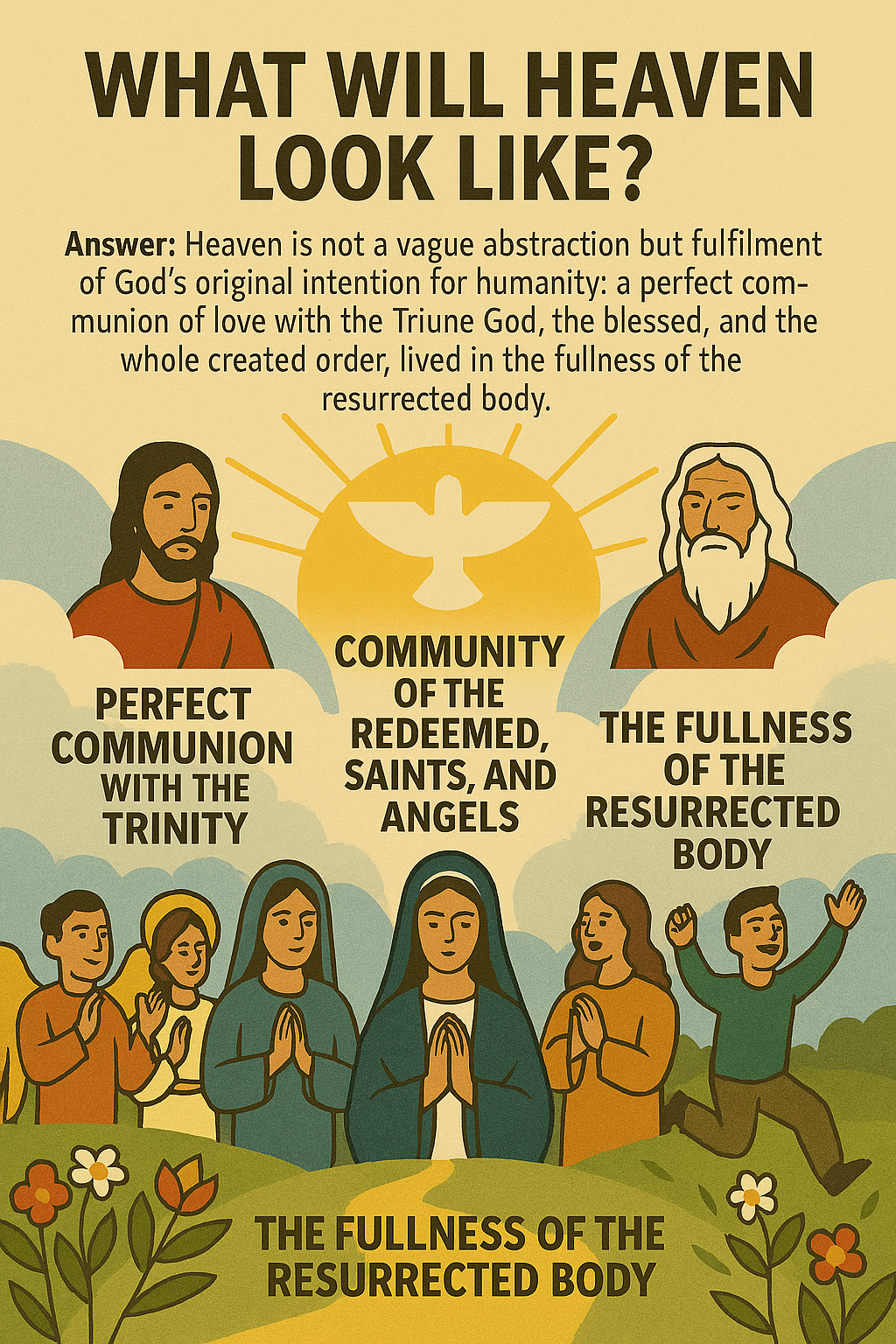
An AI image generated by the author on Microsoft CoPilot for use in his Confirmation class.
However, I also notice new temptations: if I want to mail it in on a class reading, or take the easy way out on a paper, or when I feel pressured by deadlines, I know that with AI, I am just one prompt and one click away. It has been frustrating to labor over papers and form responses to complicated questions, sometimes for long periods of time, only to then test it out with an AI prompt that addresses the concern in a few seconds.
By acknowledging that real temptation, I find myself better able to empathize with my students. No matter what policy a professor outlines, there will still be students who will use AI. This recognition opens me to consider what other measures I can take to harness the usefulness of AI and prevent abuse of its undeniable utility. For instance, I take special care when teaching to motivate and incentivize students to use these tools properly. My great hope is to provide students with opportunities to form, express, and defend their own ideas, or explore subjects which spark their curiosity. AI has helped me do this, and I know it can help them to flourish.
This also reminds me that, should I work with students in the future, I should incorporate AI with clear and direct limits, always in a way to help them strengthen their own ability to make judgments about their surroundings instead of outsourcing those judgments to a machine. It also has underscored my own commitment to using AI detection services, being “shrewd like a serpent and simple like a dove.”
Pope Leo said that AI “springs from the creative capacity that God has entrusted to us” and that we can use it to more fully participate in creation. He also has called on all Catholics to promote AI literacy in education, writing that “we can and must contribute to this effort, so that individuals — especially young people — can acquire critical thinking skills and grow in freedom of spirit.” With the right direction and proper guidance in using AI tools, I am confident that our students can better realize their creativity, expand their learning, and use that knowledge to meet the material and spiritual needs of those around them.
-//-
Image: AI image of St. Ignatius, generated by the author on Microsoft Copilot.