
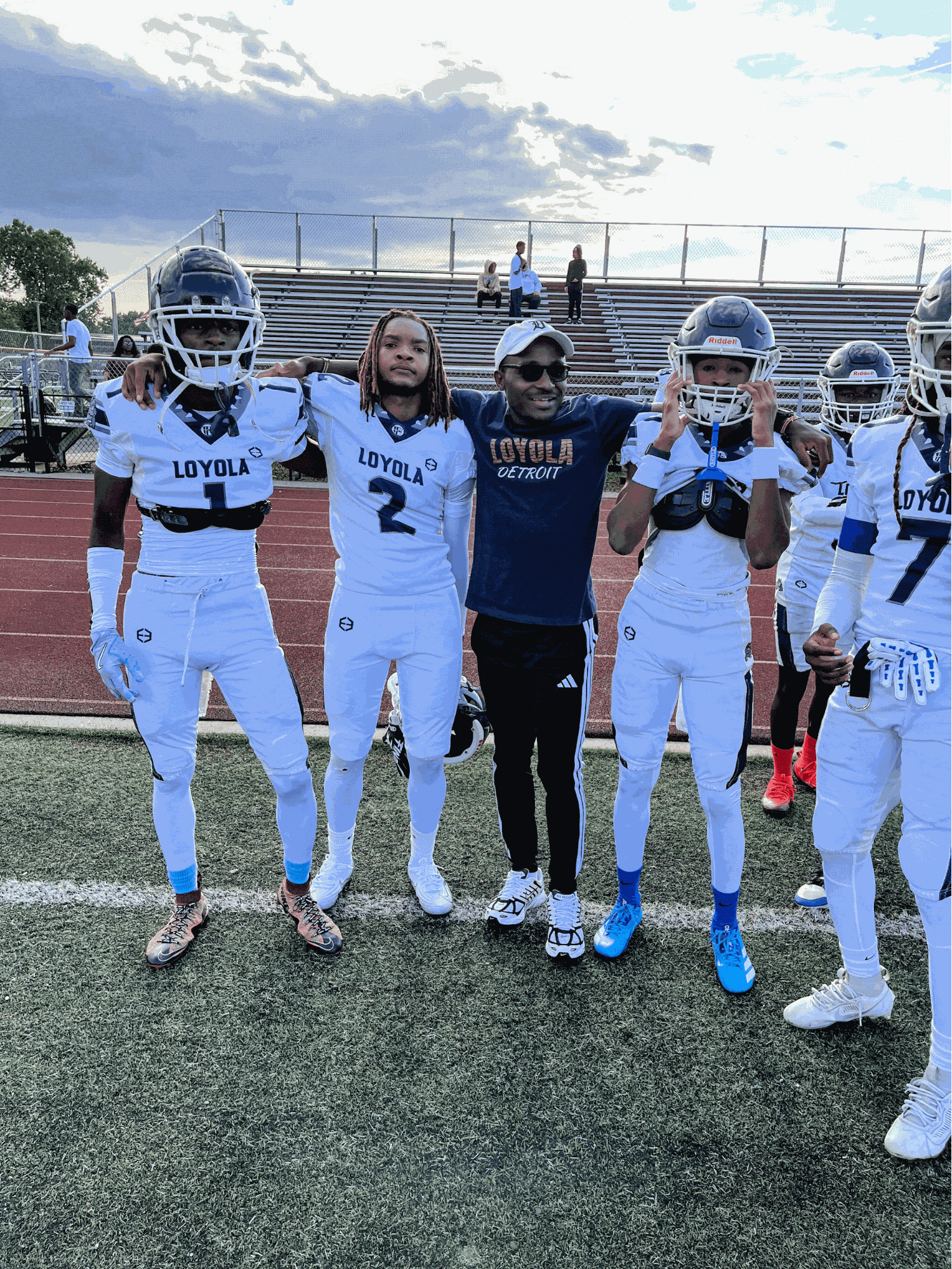
The ministry of chaplaincy is the ministry of real presence.
For my regency mission over the past two years, I have worked at Loyola High School of Detroit. While my main role has been as a math teacher, I have also served as a chaplain for both the football and basketball teams. It has been one of the most formative and life-giving experiences of my life.
Coming from Africa, where “football” almost always refers to soccer, I initially felt like an outsider to the language, culture, and passion surrounding American football and basketball. When I arrived at Loyola, however, I quickly realized that sports were not just extracurricular activities; they were woven into the very identity, relationships, and daily conversations of the students. Wanting to truly meet them where they were, I stepped into this new world with a quiet, humble curiosity, willing to ask, willing to learn, willing to be taught, even by students like E.J. and “Little E,” as they were nicknamed by the rest. Slowly, something deeper began to take root.
Connection.
Not only with the easy ones, the disciplined or naturally respectful, but especially with those often labeled “troublesome.” The ones carrying stories they rarely told. The ones who pushed limits, who spoke too loudly, or who sometimes disappeared into silence. Instead of pulling away, I chose to move closer.
And slowly, their walls began to soften.
What looked like defiance often held deep hurt. What sounded like noise was, at times, a quiet cry to be noticed, to be understood. In those small, sacred moments, connection began to turn into transformation, honest and real, never forced or rushed.
In the classroom, conversations constantly revolved around the Detroit Lions and the Detroit Pistons. Rather than staying on the margins, I chose to become a fan not only of the teams, but of what they meant to my students: belonging, pride, hope, and resilience. That simple decision became a bridge between them and me. I learned the names of key Lions and Pistons players like Cade Cunningham, so they knew I understood what they were talking about, but my goal was always deeper than statistics or rosters.
What began as quiet observation slowly turned into genuine participation. My students became my teachers, patiently and enthusiastically introducing me to the intricacies of the game, defensive formations, the role of the quarterback, offensive strategies, and the discipline football demands. In basketball, I came to appreciate the coordination between point guards, shooting guards, forwards, and centers, and the beauty of teamwork and precision in motion. These moments gently reversed the traditional roles of teacher and learner. In that reversal, mutual respect grew, and our relationships deepened.
Some of the most sacred moments, however, were not on the field or court, but on the bus rides to and from games. Those journeys became holy ground, spaces of laughter, vulnerability, storytelling, and honest reflection. There, I encountered the students as they truly were. I shared in their joy after victories and sat with them in their disappointment after losses. I began to see how deeply sports touched their emotional lives and how those emotions spilled over into their attitudes and classroom engagement.
Losses, in particular, laid bare the fragility of their confidence and the weight they carried on their young shoulders. In those tender spaces, chaplaincy found its deepest meaning. Through chapel talks and informal conversations, we reframed both winning and losing. We reflected on finding God in all things, in triumph and in defeat, in celebration and in heartbreak. We talked about character, resilience, humility, and sportsmanship. We reminded one another that dignity is never determined by the scoreboard, but by the integrity, love, and courage with which one plays the game and lives one’s life. Much of this began in the locker rooms.
Locker rooms are sacred in ways the outside world rarely sees. They are not just rooms; they are hearts laid open. Behind those doors, players quietly set down their armor. They speak honestly, about themselves, about each other, even about their coaches. It’s a place where correction is not meant to wound, but to heal; where brothers call each other higher, not out of pride, but out of love.
It is also where coaches become human again. The weight they carry, the pressure, the fear of losing, shows there. In those fragile, holy moments, I could feel it too: the tremble in the room when doubt about facing tough opponents crept in, the ache of unspoken worries, and the steady, quiet fire when the team knew, deep down, they were ready to fight for each other.
My role was simply to be there, genuinely there. From the locker room to the long bus rides filled with silence, music, or nervous laughter, to the edge of the football field or basketball court where every second mattered, I stood with them. Cheering when their spirits were low. Listening when words were hard to find. Steadying the coach when emotions ran high. Offering a presence that did not depend on speeches, yet somehow still carried weight.
Real, compassionate presence.
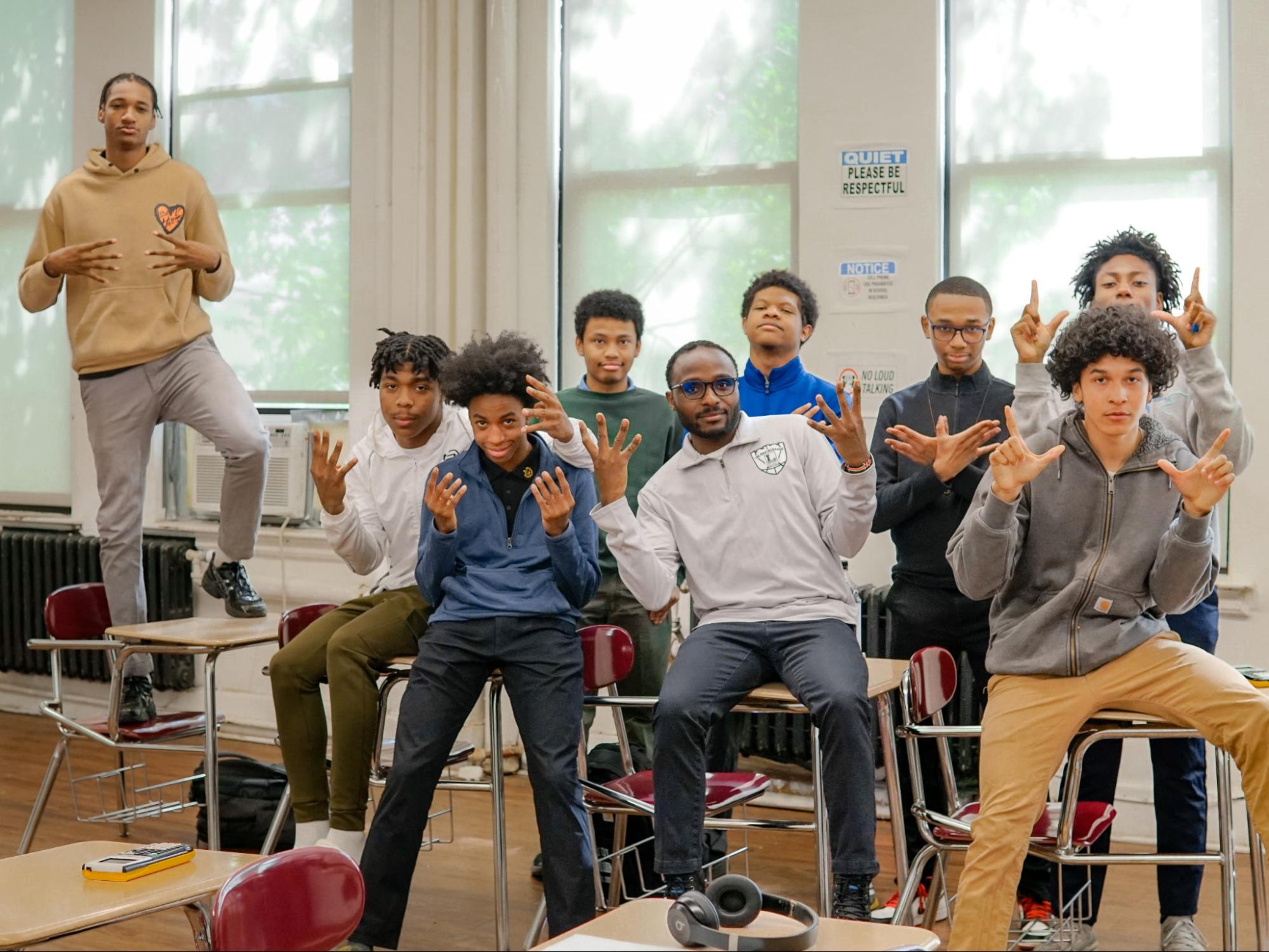
Eddie with some of his senior precalculus students at Loyola.
In those same locker rooms, something deeper began to grow. I introduced Ignatian terminology: A.M.D.G.; for the greater glory of God. Together with the coaches, especially Coach Morey, the head basketball coach, we called the players into leadership, not just on the field, but in spirit. We invited them to speak, to guide, and to own their voice during our Friday chapel team talks. What began as a game became a formation: young men, some carrying invisible burdens, stepping into responsibility, into courage, into something greater than themselves.
Because in the end, the locker room was never only about preparing for a game; it was about preparing hearts, honoring their stories, and walking with them as they became who they were meant to be.
Chaplaincy also invited me into the lives of parents and the broader Loyola community. These encounters helped me see each student within the wider context of their family stories, hopes, and struggles. I used these conversations to gently encourage families to support their children not only in their athletic dreams, but also in nurturing a broader vision for their future. We spoke about the importance of having a “Plan B,” not as a sign of doubt in their potential, but as an expression of wisdom, care, and responsibility. This holistic approach often resonated deeply, affirming the belief that education is about forming the whole person, mind, body, heart, and spirit.
One of the most profound lessons I learned was the quiet power of simple presence. Just showing up at practices, games, team meetings, and community events communicated a kind of care that words alone could not express. Presence built trust. Trust opened hearts. And once hearts were open, meaningful formation could unfold. I realized anew that ministry is less about having all the answers and more about walking alongside others, especially when they are unsure, hurting, or hopeful.
Ultimately, being a chaplain in these athletic spaces revealed that formation truly happens everywhere, not only in formal settings like classrooms and chapels, but also on buses, sidelines, locker rooms, and courts. In these ordinary moments, values are tested, character is shaped, and faith becomes real. As one of the boys put it:
“God is present in the roar of a crowd, the silence after a painful loss, and the joy of victories shared by real dawgs.”