
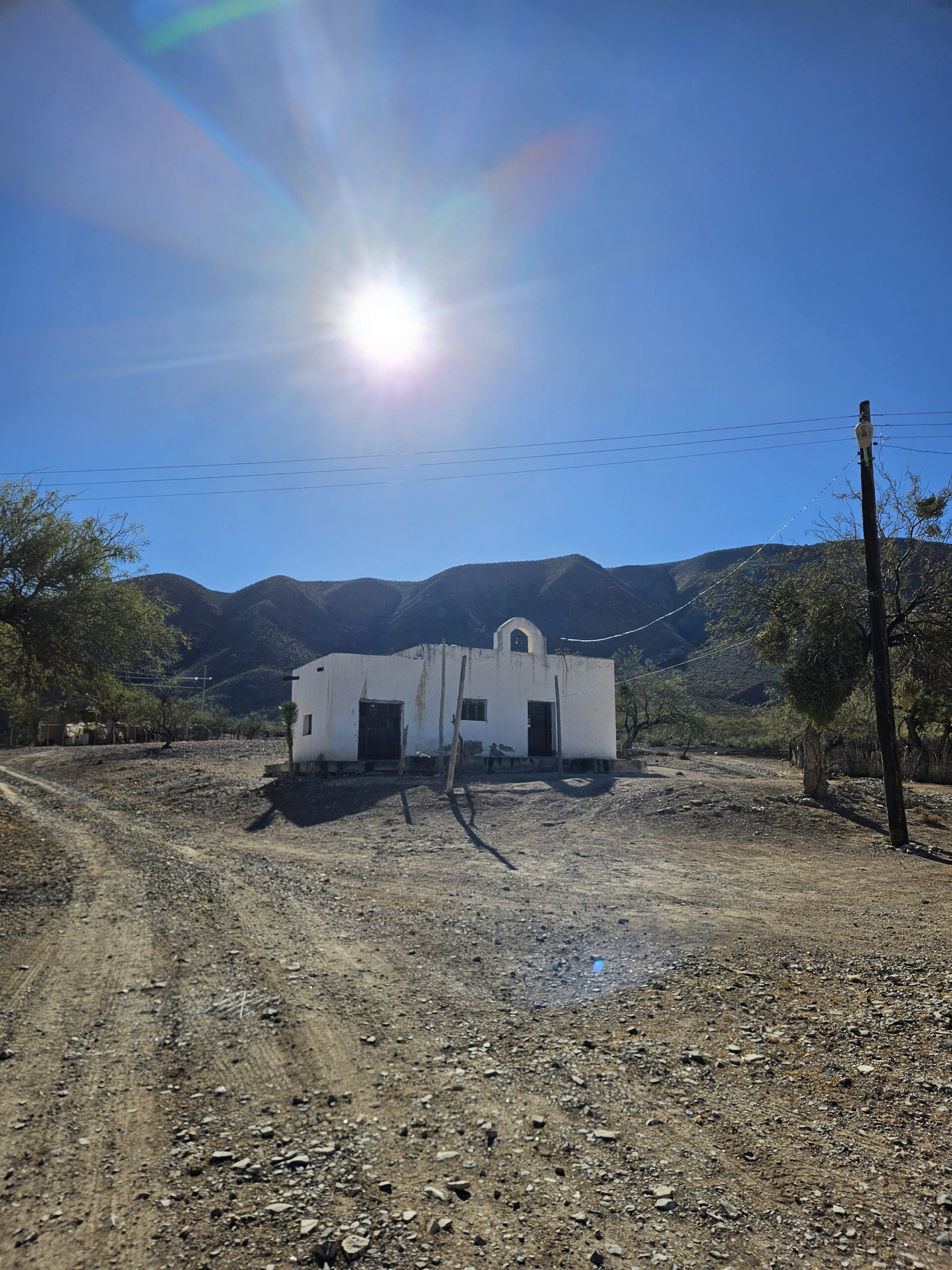
I think that I finally understand Advent—at least a little better. It only took one of the most challenging ministry experiences of my Jesuit life to reach this point.
One of my persistent temptations is to fast-forward through life. I almost always want to skip the long car ride and arrive at my destination. When the clock is counting down, I want to see it hit 0:00. Liturgical seasons are no different: why ‘suffer through’ Lent when we know the tomb will be empty? Why light the purple and pink candles of Advent when we know there is a white one ready to be set ablaze?
During past Advents, I’ve been quick to focus my eyes on the manger and sing along to classics like “Sleigh Ride” and “All I Want for Christmas Is You.” However, a recent experience reminded me that we’re not meant to fast-forward; we’re invited to long for God the way that God longs for us. I realized that I need to press pause on searching for the perfect present and – as uninviting as it sounds – spend some time “in lonely exile here, until the Son of God appear.” It’s a tried-and-true practice that lends itself to rejoicing over the Gift that God desires to give.
Concluding a six-month assignment studying alongside other Jesuits in formation in Mexico, I was sent to the country’s northern desert region to work in a Jesuit parish. While there, I was asked to assist with Liturgy of the Word services in rural communities. On the afternoon before the Feast of Our Lady of Guadalupe, I arrived at a ranch in a remote part of the desert.
The feast, celebrated annually on December 12, holds great spiritual significance for Catholics in Mexico. I’ve had remarkably positive experiences celebrating it in the past with Mexican Americans in St. Paul, Minnesota and in the Bronx, New York. This time around, I was excited to take in the day’s solemnity on grounds that more closely resemble Tepeyac, the hill where la Virgen de Guadalupe visited St. Juan Diego in 1531. A team of four people – a religious sister, a young man discerning a Jesuit vocation, a lay minister, and I – left bright and early on the morning of December 11. I was eager to arrive and begin the festivities.
Ten families live on the ranch where I was invited to minister. My companions dropped me off around 2:00 pm, wished me well, and faded off into the distance. I tossed my sleeping bag and a change of clothes into a corner of the intimate chapel and enjoyed lunch with the elderly woman charged with the chapel’s care. She graciously welcomed me into her home, but after some time chatting, she had to proceed with her day and her own preparations for the feast. I was left alone in the chapel to wait for the celebration to begin at 9:30 pm. The intervening hours were to teach me the significance of holy waiting.
At first, I was glad for the chance to rest. I speak Spanish comfortably enough, but operating in a language that is not my own still feels tiring at times, especially after a long journey. And yet, after forty-five minutes of downtime, my extroverted side was eager for some kind of interaction. Before coming to the ranch, I had entertained many preconceived notions about how this visit would unfold. Lying down on a pew in a cold, solitary, cement-walled chapel was not one of them.
Recalling stories of early Jesuit missionaries, I decided to explore the ranch, knock on doors, and meet whoever might be around. My first encounter was with an eleven-year-old girl. She was kind, and also much more interested in taking advantage of the limited cell service that rarely comes her way. I went next door, found no one home, and systematically moved from house to house. It was the same thing again, and again – only quiet and darkness resided behind the closed doors. After five consecutive houses conveyed the same message, I figured I had simply struck out. With some disappointment, I retreated to the chapel. This was not the experience I had imagined!
I started counting down the hours until we would finally begin our celebration, but it was still only late afternoon. Bookless and without cell reception, all I had to do was wait. 9:30 pm felt impossibly distant.
I sat in that chapel marinating in disappointment and uncertainty. Shocked by what I was experiencing, I quickly concluded that ranch culture is wildly different from what I had come to know while working with members of the Mexican Catholic community in vibrant cities like San Diego and New York. Between the hours of 3:30 pm and 1:15 am, I developed a sense of what it means to wait for the Lord to come to our rescue.
The first hour and a half of my waiting felt like the first week of Advent. I knew we were theoretically close to the moment for which we’ve all been waiting. But shortly thereafter, I began to feel the effects of the second week of the season. With the sun setting, I realized I still hadn’t reached the halfway point of my countdown. I was utterly alone, and acknowledging that I would have to stand by for an additional four and a half hours before seeing another soul was a blow to my morale.
After some more time had passed, I was surprised to find myself growing optimistic about the dawning of darkness. It meant that the hour was drawing near. I was hopeful for the celebration to come – the pitch black was a welcome sign. Week three.
I then discovered that the chapel lights were out and that we had no access to electricity. The darkness that had briefly been my friend turned into a reminder that no one was coming for at least another hour. Week four felt like the longest as I sat shivering and anticipating the company of anyone else.
I wish I could pretend that the time spent waiting was filled with enlightened prayer. It’s romantic to think about what it would have felt like to hear Mary’s voice or sense the warmth of the child Jesus in my arms. But there was nothing. I felt alone. I saw no one. I heard only the cry of the goats who were brave enough to do what I couldn’t. I was experiencing real desolation: an invisible distance between God and me that could only be felt spiritually. I longed to be cared for in that moment by our Lord, but He wasn’t there. He was yet to be born.
I can’t say that the night took a dramatic turn when the first person walked through the chapel door. It didn’t improve for me when we started singing or praying together, either. Nor did I feel God’s presence as I stood around a fire, sipping on tequila with the men of the ranch while the women prayed indoors in silence. The desolation lasted into the early morning, and the longing for some resolution only intensified.
The following morning, December 12, I woke up early to the sound of a donkey banging on my door. It was time to gather my things and move on to the next ranch. There was another community waiting for me to lead a liturgy in honor of la Virgen.
Climbing onto the back of a motorcycle for the first time in my life, I felt spiritually and emotionally different. I had the Eucharist in my backpack and was moved deeply by the mountains that surrounded me as my eighteen-year-old driver weaved in and out of desert plants. I then jumped into a pickup and bounced around for nearly two hours as we got lost en route to the next community.
There was a tangible beauty in the chaos of the journey.
As we wound our way through the second ranch, my driver started beckoning parishioners with the toll of his horn, and an intimate assembly of women and children gathered around the statues and images of Our Lady that they brought along with them. We prayed together as horses neighed and sheep baaed. Some of the women offered prayers of petition, hoping that la Guadalupana would hear and take them to God. We concluded and sang some more. The fourth week of Advent was coming to a close.
And then, the birth!
A young girl, who had no idea how old she was but who couldn’t have been older than four, came up to me following the liturgy and said, “Thanks for the Mass, Father. It was very beautiful.” What I heard was overwhelming: a multitude of the heavenly host with the angel, praising God and saying: “Glory to God in the highest and on earth peace to those on whom his favor rests.” And what I saw before me was the Christ Child, wrapped in a swaddling My Little Pony T-shirt.
I left that ranch wanting “[to make] known the message that had been told [to me] about this child…returning, glorifying and praising God for all [I] had heard and seen, just as it had been told to [me].”
The message was this: He is worth the wait.
-//-
Picture courtesy of the author, taken at the Chapel of San Miguel on the Los Yeguales Ranch near Parras de la Fuente, Mexico.