
If you’re anything like me, the state of our society today elicits a wide range of emotions. Filmed clashes between concerned protestors and militarized law enforcement conjure feelings of fear and anger. Anonymous online comments further incense my outrage. Some days I find myself becoming increasingly anxious about the future of American democracy. Other days I feel the desire to burrow and reemerge later when the noise has settled down.
The temptation to withdraw inevitably raises the key question: where have all the prophets gone?
Of course, the public square is not lacking voices. In fact, between social media and traditional media, there is no shortage of commentary on the contemporary state of affairs. In the wake of the shooting of Renee Good, each hour there was seemingly a new edit, new angle, or new clip of her encounter with ICE officials. Every new perspective seemingly served only to further entrench viewpoints. More recently, the diverging and conflicting narratives surrounding the killing of Alex Pretti further underscore the polarization that is plaguing our times.
So where have the prophets gone that can break through the noise and unify the people of God?
Catholic leaders have issued statements in response to the growing protests in Minnesota and policy decisions by the Trump administration. In a somewhat unprecedented rebuke, three American cardinals denounced the Trump administration’s foreign policy approach in a statement circulated by The New York Times. A few days later, Bishop Robert Barron of the diocese of Winona-Rochester authored an opinion piece in Fox News seeking a middle ground. Online commenters were unfortunately (and predictably) quick to dismiss both pieces as partisan politics disguised beneath a veneer of Catholic teaching.
At the risk of reinforcing stereotypical Catholic perceptions of these bishops’ political leanings, it should still be pointed out that the Times did not cover Barron’s article nor did Fox mention the cardinals’ statement. Such uneven coverage calls to mind the axiom that “no prophet is accepted in his native place” which appears in all three synoptic gospels (cf. Luke 4:24, Mark 6:4, Matthew 13:57). Christian Charity calls us to presume that these church leaders are deploying all available means to carry out their consecrated and important role to teach the faithful. Their disparate coverage in the mainstream media suggests, sadly, that even the shepherds of the church are subject to the same entrenched polarization that besets wider society.
So where have the prophets gone that can speak a unifying message of God’s justice to a world desperately in need?
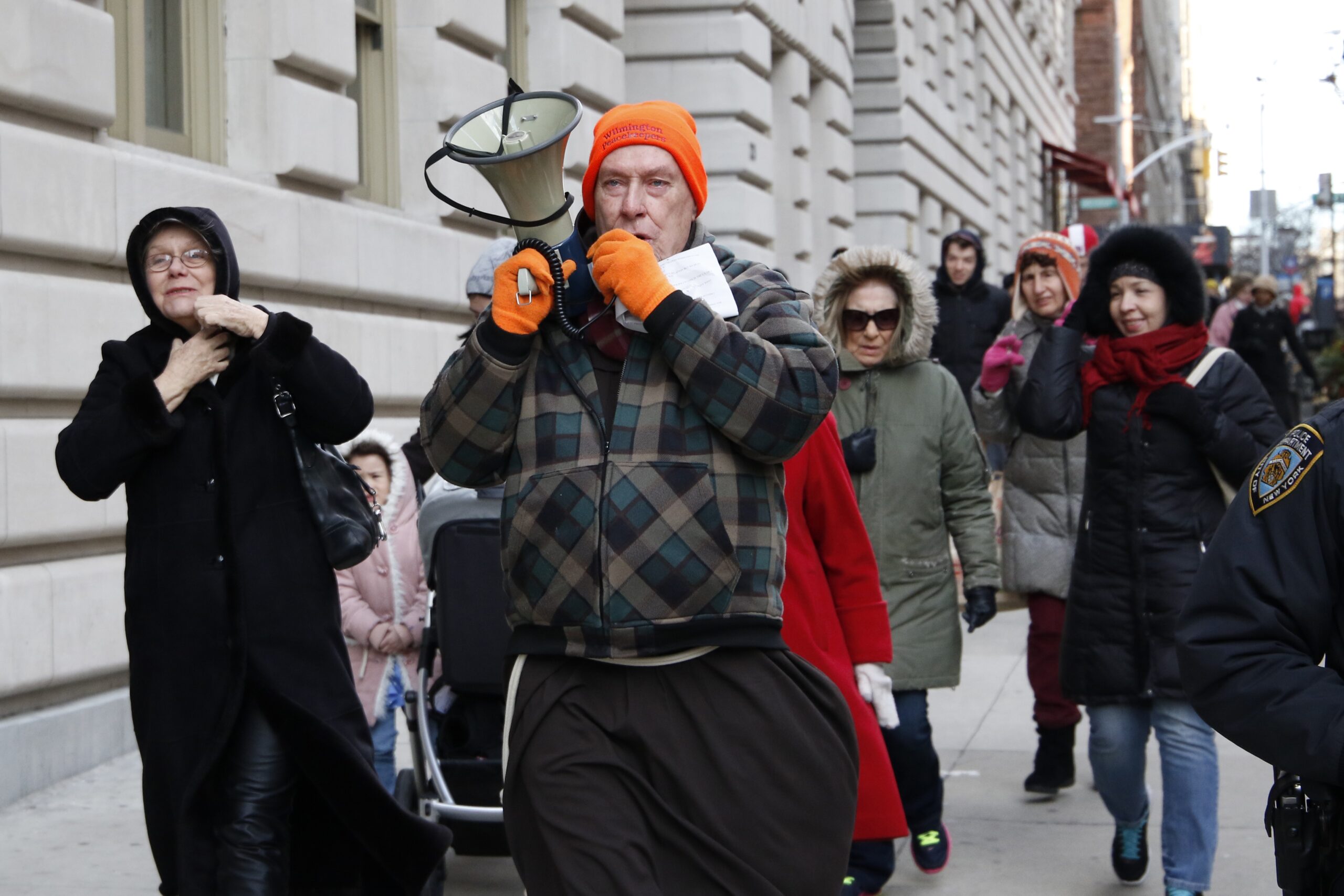
When everyone has a microphone in a smartphone society, spoken prophecy devolves into cacophony and reinforces echo chambers. Perhaps our media-laden world demands a new type of prophet.
In the meditation known as the “Contemplation to Gain God’s Love” at the end of the Spiritual Exercises, St. Ignatius of Loyola writes that “love ought to be put more in deeds than in words” [Spiritual Exercises 230]. Ignatius is not defanging the megaphone. Words still matter for Ignatius. A higher order of love, a more perfect love, for Ignatius, however, is a love that is put into action.
The prophets to look towards today, then, are perhaps those who channel their righteous anger into concrete action, as opposed to crafting their next TikTok or Instagram story. The prophets among us are those hosting workshops at their local parishes informing people of their rights. The righteous are those bringing meals to the homebound and checking in on their neighbors. The role models are those actually building the Kingdom of God instead of merely opining on what that kingdom should look like.
Such an approach to prophecy may sound self-defeating at a time when systemic and interpersonal injustices only seem to be accelerating. For the typical everyday Catholic, however, this prophetic path is deeply aligned with Catholic Social Teaching. The US bishops teach that all people are called to participate in society, promote the common good, and defend the poor and vulnerable. The principle of subsidiarity suggests that such actions be taken at their appropriate level, with a preference for local communal action where possible. That means for the average Catholic, therefore, their work for justice is their backyard—not as one more voice in the raucous national debate.
The outlet for my unresolved righteous anger is not my social media profile or—somewhat ironically—this publication. While I feel the call to take a stand or to speak (from my perspective) some sanity into the conversation, I pause to question the value of such contributions. Will venting my frustrations by owning the other side, by highlighting the (seemingly) obvious facts, help me feel like I am contributing to the good fight? Possibly. Will it actually advance justice or change someone’s mind? Probably not.
No matter one’s position, context, or political leaning, there is one more radical action for any aspiring modern-day prophet: forming their conscience. Of course, all Catholics are called to this lifelong project. Yet conscience formation is as important as ever. Snap judgments are trendy. One additional angle of a video clip seemingly closes the case, or a potent quote ends the debate.
Conscience formation, on the other hand, cultivates a temporary suspension of judgment in the pursuit of Truth. A well-formed conscience is open to the possibility that one is missing something they are not seeing, that there is another piece to the puzzle. This does not imply that one is silent in the face of injustice, but rather prudent in applying their labels of just versus unjust. The well-formed and discerning Catholic can condemn wrong only because they have carefully and prayerfully discerned the right. With today’s 24/7 commentary on media news and comment culture on social media, one has to wonder if the virtue of prudence has been replaced by the chase for attention or likes that often accrue to the first voice.
The prophets of our current age are not the loudest, nor those who hold the highest office, nor necessarily even those who wield their bibles in defense. The prophets are the ones who hear the word of God and obey it (cf. Luke 11:28). Their quiet, everyday, actionable love is changing the world—and might be the only viable antidote to the accelerating polarization of society.
Photo License: (CNS photo/Gregory A. Shemitz)