
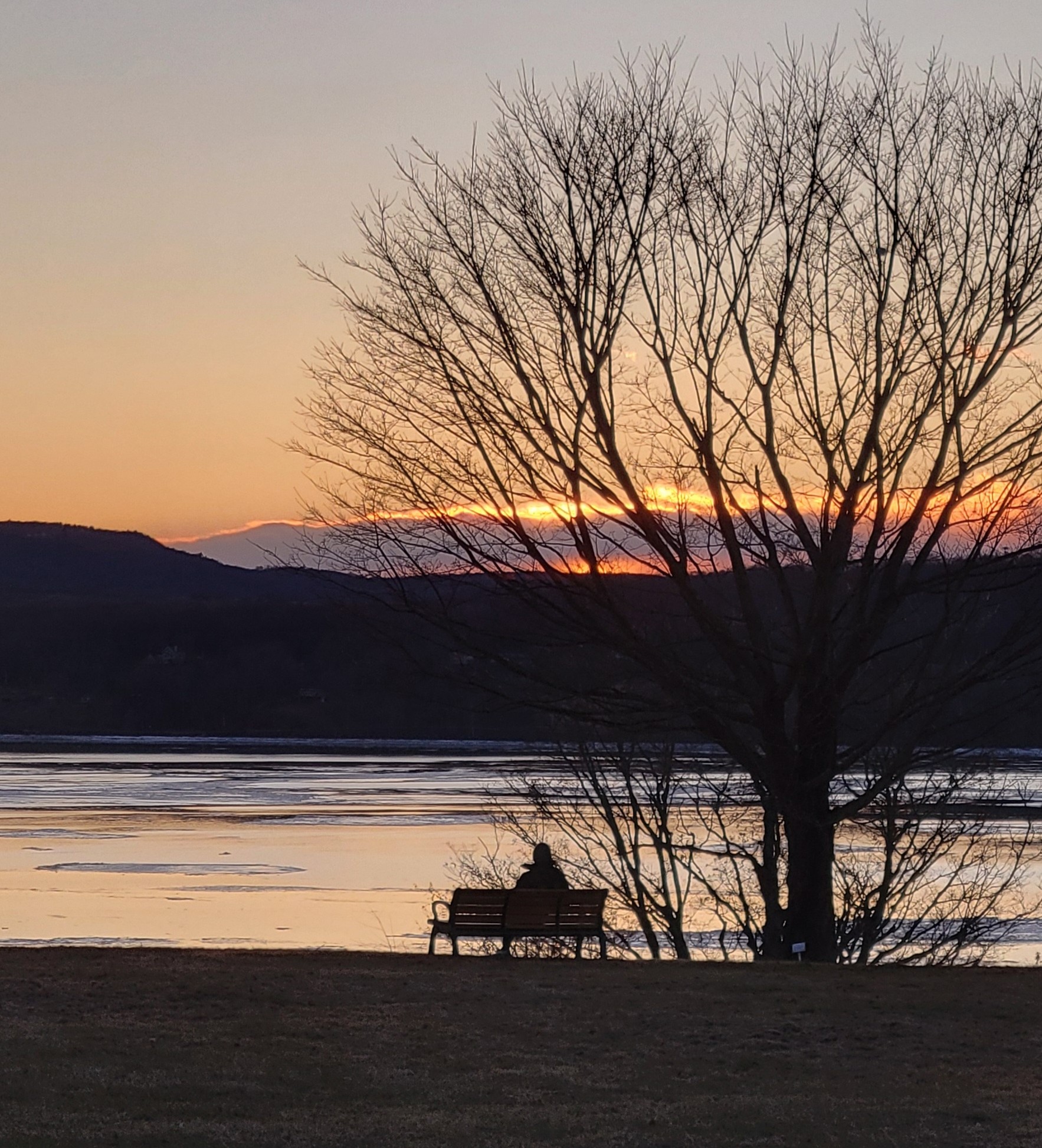
Though I would like to think of myself as a rational person, my emotions are seldom “rational”. Loneliness is one of them. Since irrational behaviors are often born of irrational thoughts and emotions, I often reflect on how my loneliness impacts my behavior in everyday life.
After an exceptionally exhausting day, I may be looking to call a friend and share what a crazy day it has been, or I look for some of my Jesuit brothers to hang out with. In either case, I am depending on their company to drown out the feeling of loneliness. But what am I running away from? What is this feeling of loneliness that persistently returns to us, a feeling that is seemingly without a permanent solution, even as we hope that the next relationship will soothe this inflamed heart permanently?
Even three years after its publication, the US Surgeon General’s advisory on “Our Epidemic of Loneliness and Isolation” (2023) still carries great relevance. It warns of the growing feeling of loneliness in the general population and emphasizes the importance of social connections. The report’s devastating statistics highlight how social isolation can increase the risk of depression, anxiety, dementia, stroke, and heart attack. Tackling the issue of loneliness head-on, it stresses that a lack of adequate social relationships, unmet needs, and perceived isolation all contribute to the experie nce of loneliness.
If our heart is bound to be lonely when we lack “adequate” social relationships to meet our social needs, then I wonder at the inevitability of loneliness for all of us. Meeting and maintaining such an adequate relationship can be, after all, challenging. Even the perfect partner, the best of friends, and the closest of family may still fall ill, feel exhausted, or be otherwise unavailable to share their intimacy with us, leaving us in loneliness. We are only human, called by God to love perfectly. However, we tragically fail to do so even with the best of intentions. We call this broken nature of ours “Sin”. If God created us and knows us, including our sins, then what does God have to say about a loneliness that seems helpless and inevitable?
Swings between Loneliness and Solitude
Henri Nouwen, in his book “Reaching Out”, talks about our internal movements that swing between loneliness and solitude. On one hand, we live every day experiencing moments of loneliness. On the other hand, we live in a world filled with a message of togetherness, intimacy, and connection as the achievable ideal, which results in comparing ourselves to an unachievable social goal. Invoking our fundamental fear of being abandoned and left alone, Nouwen states that much of everyday social interactions cannot ultimately cure us of our loneliness. We run from this fear of isolation using various activities, from phone calls to hangouts. We choose to look for internal paralysis rather than to honestly look inward at this fear and need, rather than taking a look inward courageously. Nouwen suggests that this honest look inward begins an internal movement towards Solitude.
One day, I wanted to hang out with some of my Jesuit brothers. I later learned that some of these brothers went out and I was not invited. In that moment, I remember the distinct pang of loneliness within myself. My desire to hang out was not met and it reminded me of this fundamental fear of isolation. My own encounter with the small disappointments and dissatisfaction in finding adequate social interactions called me to grow in my internal awareness, to look at my loneliness courageously. I saw that my desire to hang out and fulfill my social needs was arising from a fear of loneliness, increasing activities to reduce time spent alone.
Yet there was also consolation in not hanging out. I am an introvert and have plenty of times enjoyed solitude as a way to rest my busy soul. An internal awareness of fear-born desire led me to turn my outward focus into an inward look, to explore the feeling of loneliness. Using Nouwen’s words, I was “venturing into the desert of loneliness and turning it into a garden of solitude”.
Nouwen suggests that in all human interactions some room for mystery is needed. An individual space to personally reflect alone. How could there be a relation between two people, one in which they are so close that they are one and the same? Nourwen suggests that a healthy self-awareness of loneliness is necessary to accept and welcome others into our hearts, the ability to Love more perfectly. There is truly no room to embrace another fully if my desire for distraction away from loneliness is taking up the space within. Now, none of us are perfectly living out this honest embracing of loneliness, but rather we swing back and forth between loneliness and solitude. Perhaps it is in this self-awareness and the process of becoming that we can truly create a space for others to belong within ourselves.
Waiting for God
I visited the Death Valley National Park as part of a retreat once, and felt my heart becoming silent at the immense death that prevailed. It was late October, and the desert was filled with deadly silence everywhere. Ironically, it was there, in that desolate place, that I felt God most present. There was nothing else that distracted me from looking upon who I am before God. I noticed then the paradoxical nature of my experience of God, who was most present in one of the loneliest places on Earth.
I wonder if this is the mystery of loneliness. Even though we may never find the perfect social connection that can perfectly meet our social needs, we are with God who does perfectly understand our call, our good intentions, and our needs. Nouwen writes in a later chapter of the same book about spiritual movements between delusion and prayer. Moving away from the delusion of immortality, we move towards a prayerful and patient waiting for God. Though our hearts may be inflamed with loneliness, in the perceived absence of God, God is most paradoxically present in our lives. Our desert of loneliness is perhaps a paradoxical invitation to find God, waiting for us to meet him in the garden of solitude.
-//-
Photos courtesy of the author.