
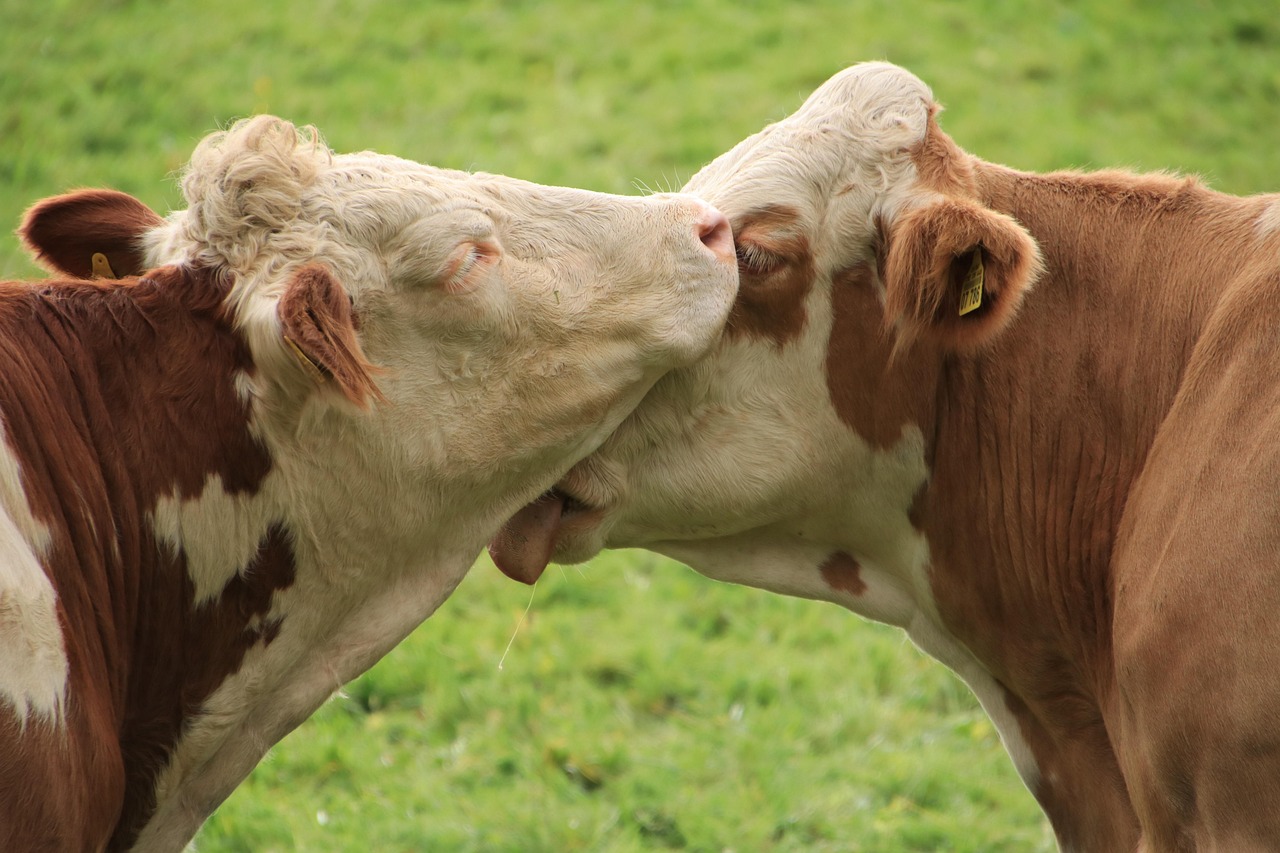
When President Trump signed a federal law criminalizing cruelty towards animals, there was much rejoicing among animal lovers and non-animal lovers alike. Cruelty towards sentient creatures is abhorrent, and good people desire to fight against this evil. But one may wonder why cruelty toward animals is wrong at all. If one has something to gain by treating an animal cruelly, why not be allowed to pursue it? What confers animals the right to be free from human cruelty and harm?
One reason is that we like some animals. Many Westerners find dogs cute, and enjoy their company. It is a subjective stance, and we cannot impose this belief on others. The uproar in South Korea over the banning of dog meat is a testament to opposition to such subjective views. How can cow meat lovers tell dog meat lovers to stop eating dog meat? After all, some people find cows to be cute and keep them as pets. Besides, from a cultural standpoint, some societies have been eating dog meat for centuries.
Another reason, sometimes overlooked in Catholic thought, is that cruelty towards animals morally injures the person committing the cruelty. This hurts human society. The Catechism of the Catholic Church (#2418) reflects this view: “It is contrary to human dignity to cause animals to suffer or die needlessly.” Based on the theology of Thomas Aquinas, the reasoning is anthropocentric, considering the welfare of animals only if it benefits humans. Perhaps, if we could invent machinery that processes animals from their birth to slaughter without human contact whatsoever (a situation close to reality on factory farms), cruel treatment of animals would be acceptable because no human would be affected by the cruelty.
However, I wish to argue the reason for anti-animal cruelty laws is that animals have the right to experience the world without unjust treatment from humans. Treating animals cruelly can affect the perpetrator only because animals can actually experience the cruelty. No one thinks that poking an oak tree with a nail is “cruel”. On the other hand, doing so to a puppy would be abhorrent. So, cruelty to animals matters because animals can and do experience pain and suffering.
Before discussing animal rights, however, it is helpful to first discuss the notion of rights in general by examining human rights. For humans, being made in the image of God bestows on them their dignity and right to self-determination. Thus, we may ask what it means for humans to be in God’s image. Grégoire Catta notes that “in the Thomist tradition, the creation of human beings in the image of God as narrated in Genesis 1 has three implications. First, human beings have a capacity for God; they can know him. Second, they are capable of self-mastery. Third, they have a capacity for ownership.” We could apply these three conditions to non-human animals.
The capacity for God can be examined through the capacity for love, and we can see that dogs and cows express their love in various ways, including altruism and grief. There are numerous instances of animals adopting the young ones of other species, and of animals grieving the deaths of their “loved” ones. Both of these cannot be explained as merely hard-wired evolutionary traits. Animals appreciating beauty and engaging in play provide further insight into their capacity for the transcendent.
Additionally, trained animals can go against their instincts, displaying a rudimentary level of self-mastery. For example, a dog can be trained to wait in front of its food until given the command to eat. Scientists have observed that crows possess mathematical skills. Animals can also display attitudes of ownership of territory or possessions, as we can infer from the behaviors of our pets.
Consequently, I argue that animals are also made in the image of God, but to a lesser degree than humans. Furthermore, this degree varies among animals as well: a dog or a pig does not have the same capacities as an earthworm. For now, we may only consider cognitively sophisticated animals. Christopher Steck S.J. describes them as having “a sense of self that endures across time, a capacity for having affection for one another, empathy, a conscious awareness of themselves and the world around them, and a rudimentary capacity to reason.” This category of animals would include our pets as well as farm animals.
However, extending rights to those different from us have hit road blocks historically. When Europeans discovered peoples in the New World, they were unsure about the rights of these peoples. James Keenan S.J. notes that “the encounters by Europeans of non-Europeans brought new questions. When other people seem not to have their own positive laws, do they have rights?” For centuries, Europeans ignored the rights of native peoples of other lands. They chose to believe that natives lacked rationality or societal structures and disregarded the natives’ dignity that came from being made in God’s image.
Similarly, we can ask whether animals have rights even if they do not have their own laws or a sense of societal structure. If animals live according to their God given natural inclinations of feeding, breeding, herding, wandering, and engaging in play, then they ought to have the right to do so without undue human intervention. Animals do not need to be rational or have formal societal structures to have the benefits of rights.
At the same time, I do not believe that animals have the same rights as humans. Because animals possess lower levels of observable intelligence, empathy, and self-awareness than humans, we may confer on them lower levels of rights. We would not owe them anything in times of their need. For example, an injured deer would not have the right to medical treatment at the local vet. However, animals would have the right to be free from intentional cruelty and unnecessary killing by humans.
Since plants do not possess such “dignity”, a faithful Catholic ought to eat plants for sustenance, and eat animals only if sufficient plant-based food is unavailable. Furthermore, the burden of the unavailability of plant-based food ought to be quite high: the lack of plant-based options at the nearby McDonald’s is an insufficient reason. One could easily go to a grocery store on the next block. On the other hand, humans living in remote rainforests or the tundra may genuinely not have access to sufficient plant-based foods and may need to supplement their nutrition with meat.
Animal cruelty has been an ethical blind spot in the Catholic Church for centuries. Some people may be ignorant of the cruel realities of animal farming. As Sy Montgomery wrote in the New York Times: “I had no idea that while the Ladies (backyard hens) enjoyed shelter and sunshine, fresh bugs and freedom, their newborn brothers faced a gruesome fate shared by 6.5 billion male chicks around the world each year… they are ground up alive or gassed to death.” The female egg-laying chickens on factory farms do not fare much better in a life defined by confinement, disease, and injury. I will spare you the details of abject conditions of other farm animals under human “care”. Even if one is ignorant of these factory farm conditions, no one can ignore the obvious reality that animals need to be slaughtered for meat. When animals are slaughtered unnecessarily, which is almost always the case in our world, their right to life is violated.
Perhaps, an updated version of the Catechism (#2418) would read, “It is contrary to animal rights and human dignity to cause animals to suffer or die needlessly.” The food choices of Catholics would need to reflect this important teaching.