
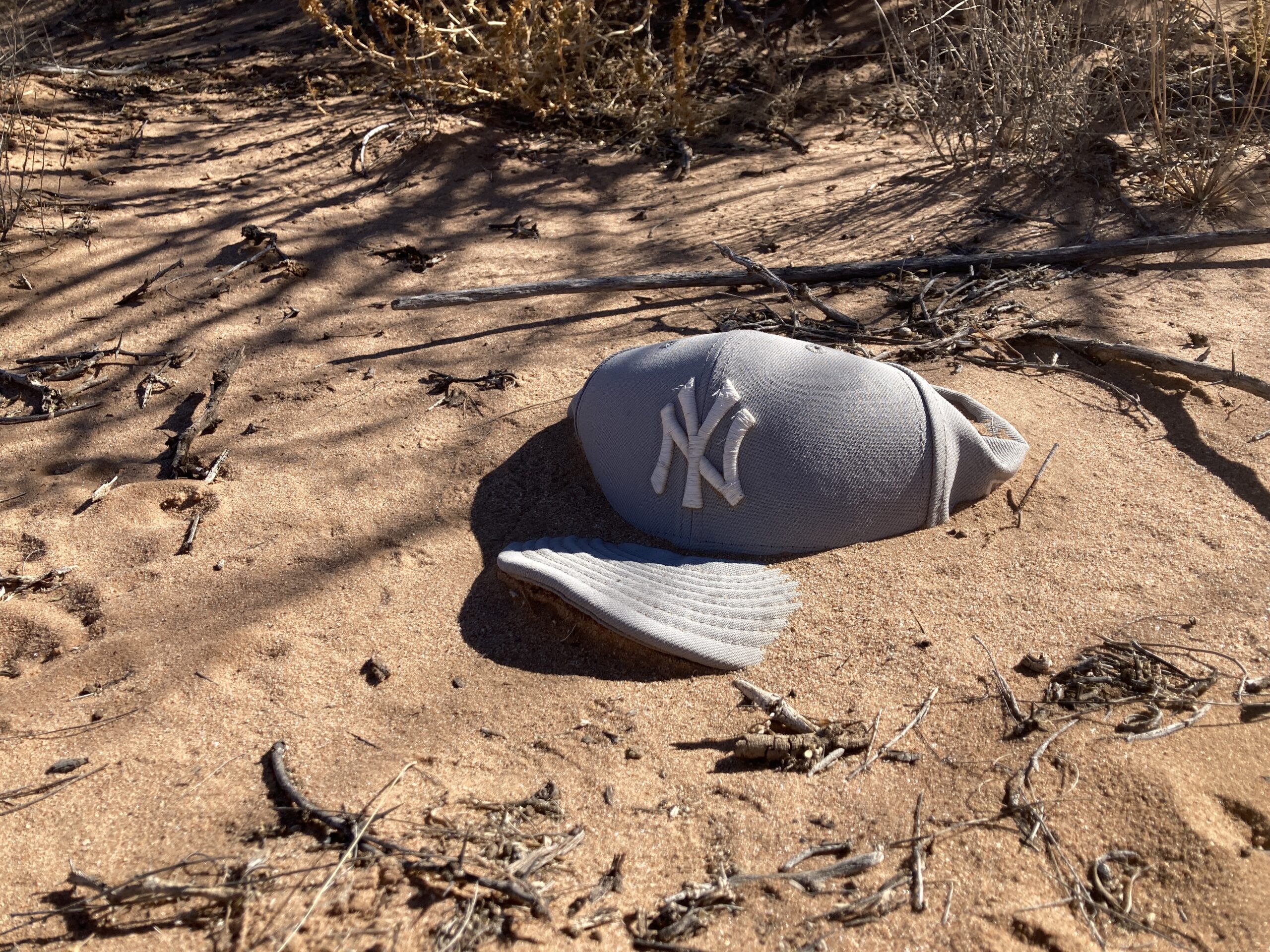
The silence in the desert was only interrupted by the wind rustling through the thorny scrub that stretched for miles in every direction. After a few minutes, a brother Jesuit spoke over the radio, “stop a moment, need to check a backpack.” Our group of six stopped in our tracks and looked around as we waited. “Backpack is empty, let’s keep moving.” We continued walking in parallel lines, looking for migrants, their remains, or their possessions that could help with identification. Over three unseasonably warm mid-December days, we combed the southern New Mexico desert, walking in small groups of five to six volunteers.
I was unsure of my expectations when I signed up for this search-and-rescue in the desert. I volunteered because I hoped to support my Jesuit brother organizing the trip through Battalion Search and Rescue, a humanitarian non-profit based in New Mexico. Although we knew there would be few migrants in the desert at this time due to the current political landscape, finding remains enabled the families to gain some closure in their grief. Personally, I had the time, the physical capacity, and the desire to learn more about immigration in general.
The heat and dryness, and intense sunshine posed physical challenges of sunburn, dehydration, and fatigue. The sandy soil, covered with thorny brush, made for an unforgiving terrain. Some of the thorns went through my sturdy hiking boots, almost making it to the soles of my feet! The burrs caught in the socks were a constant source of pain and annoyance around my ankles.
This is the experience of the migrants attempting to cross the desert. Quite literally, it was walking a few miles in someone else’s shoes in solidarity with them. In many ways, the migrants have it much harder. They may be in worse physical shape and likely have low quality shoes while needing to cover longer distances in inclement weather over multiple days. Lack of water, food, and navigation tools further compound their hardship.
We often came across discarded possessions. Seeing clothes left behind, caught in the brush, and rustling in the wind painted a poignant picture. The desert is a quiet place, with no human presence for miles around. So, it was a surreal sight to suddenly see a shiny jacket in a thorn bush. I wondered whether the owner of the jacket had made it to safety, whatever that meant for them. I knew many had not because their remains have been found in that area over the past few years. I wondered about those who died alone in the desert: in pain, in fear, and with no one to hold their hand. I thought about their families desperately holding on to the hope of their loved one returning home. Was no news good news because death was unconfirmed, and they could hold on to the sliver of hope? Or would getting confirmation about their death provide some closure and aid the process of grief and healing? There are no good options in such a tragic situation.
Sometimes, we found religious objects such as rosaries and Bibles among the things left behind. Among the meager possessions they carried with them, they had made space to carry things that bore the presence of God. I prayed that the light of Christ had been with them in their darkest hour, and darkness had not overcome it. Perhaps, a scripture passage or a Hail Mary had comforted them. “See, upon the palms of my hands I have engraved you.” (Isaiah 49:16). “Holy Mary… pray for us… now and at the hour of our death…”
I was unsure if finding human remains would make me feel more accomplished. I suppose if we search for something, then finding it would count as a success. However, the finding of remains would confirm the occurrence of another tragedy. Finding nothing would mean the possibility of fewer deaths in that region. My group did not find human remains – the other groups of our search party did. The search leader explained that “unsuccessful” searches suggested that “fewer people are being funneled this far west (of El Paso) — and that fewer are suffering distress and dying out here.” Blank searches help narrow down possibilities of search sites, leading to a better understanding of travel routes. And if nothing else, our presence there kindled hope in the locals regularly engaged in this difficult ministry. They felt supported and seen by Jesuits who were in solidarity with them and the migrants for a few days.
People who die in the desert are not merely numbers in the news and government records. These were people with life stories marked by loving relationships and dreams. I wondered how I would feel if I had met them before their fateful trip through the desert. I tend to move towards statistics and categorizations to help me process the situation when numbers become large. Such is the reality of living in this big, wide world of globalization. But I must remember them as individuals known and loved by God, and not just as numbers in the news.
Pope Francis often reminded us that mercy is a cornerstone of the Christian life. The Church helpfully spells out the seven corporal works of mercy, one of which is to bury the dead. We believe in the Resurrection of the body at the end of time. Through the Incarnation, Jesus divinized the human body, obligating us to treat it with dignity. The body that is left behind at death is sacred in our tradition. I believe the remains in the desert were crying out for this mercy and dignity. And it was my duty, even obligation, to honor the bodies of those who have died far from their communities who would have given them a proper burial.
Long, quiet hours in the desert left me with my own thoughts. The Dark Spirit attempted to sow confusion through what-could-have-beens: Why was I engaged in something difficult and futile when I could have been relaxing during my vacation? Besides, the desert is a big place, and we would never find the countless migrants who have been lost over the years.
The Good Spirit reminded me of the Parable Of The Lost Sheep. When the shepherd searches for the lost sheep, he does not know for certain that he would find that sheep. Leaving the ninety-nine other sheep behind is imprudent, even absurd. But the shepherd’s love for his sheep is expressed in his longing to be reunited with the lost sheep. The search itself is an expression of love. When we do things out of love, we ought not expect results or adulations. We desire the good of the other for their sake and act accordingly. Jesus tells me to search for the lost sheep, despite the absurdity of the situation and the uncertainty of the outcome. Jesus gently reminds me that the path of Christian love operates according to the standard of unconditional and reckless love.
During an outdoor Mass in the desert celebrating the Fourth Sunday of Advent we sang O Come, O Come, Emmanuel: a stark reminder that God became incarnate among humans languishing in exile. God made his dwelling place among humans who were suffering, lost, and had gone astray. Meditating on the Incarnation in the desert was a reminder of our ultimate need for God. When stripped of comforts and distractions, I realized the aridity of a life without God. O Come, Lord Jesus; and may we rejoice when you come to us.
As the search wore on, I appreciated being on a mission with my brother Jesuits. A demanding task had provided an opportunity for connection. We prayed and worked as a team, sharing electrolytes and sunscreen, laughs and stories. My brothers’ dedication to the ministry inspired me to transcend the limits I had imagined for myself. As I approach presbyterial ordination, I am consoled to have the support of a dedicated, competent, and spiritually grounded band of brothers.
When I left the desert on the last day, I wondered what the future held for the migrants crossing the desert. What was the solution to this wretched situation? How do we prevent deaths in the desert? A higher wall, increased surveillance, a more open asylum system, more humanitarian aid, better trade deals with low-income countries, security assistance to these countries,…? There are no easy answers. These thorny questions demand that we continue to wrestle with the issue of migration.
But let us not forget the individual people lost in the desert. Our Lady of the Way, pray for us.
Photo courtesy of author.